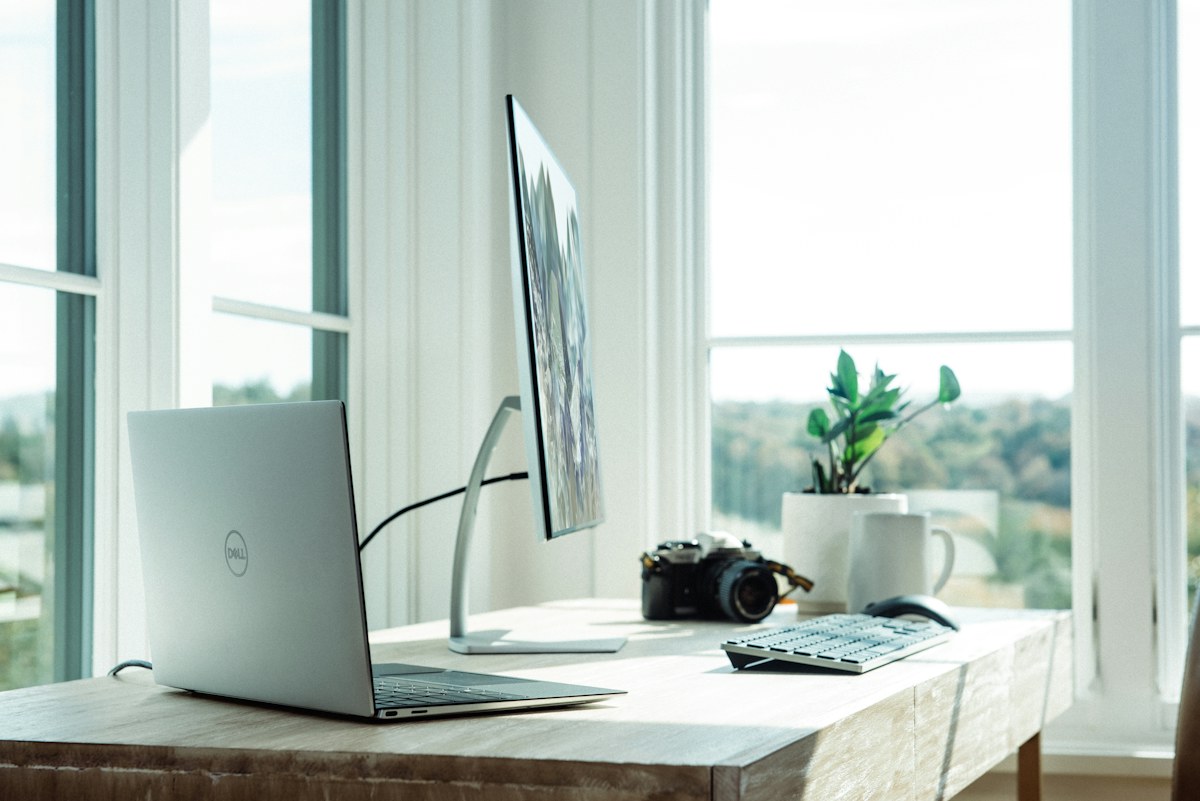
Quick verdict
On a shallow 45 cm desk, a desk-clamp laptop arm is the #1 choice because it frees almost the entire tabletop for your keyboard and wrists. If your desk cannot accept a clamp, choose an open-bottom aluminum C-frame stand so you can slide a compact 65% or 75% keyboard neatly underneath.
Strengths of this guide
- Breaks down exact centimeter clearance on a 45 cm tabletop
- explains why wide Z-hinge stands fail on shallow desks
- includes a 3-point measurement checklist before ordering.
Limitations and scope
- Built from standard ergonomic geometry and published dimensions of C-frame, Z-hinge, and clamp-mounted arms
- does not yet include hands-on caliper measurements of individual retail SKUs.
The geometry problem of a 45 cm deep desk
Many compact apartment desks and writing tables measure only 45 cm deep. A standard 14-inch or 15-inch laptop chassis already takes 22 to 24 cm of depth. If you place that laptop on a stand with a thick forward-extending base plate, you are left with less than 15 cm in front for an external keyboard and wrist support.
The result is predictable: the display sits too close to your eyes while your wrists press against the hard front edge of the desk. Fixing this starts with picking the right structural footprint.
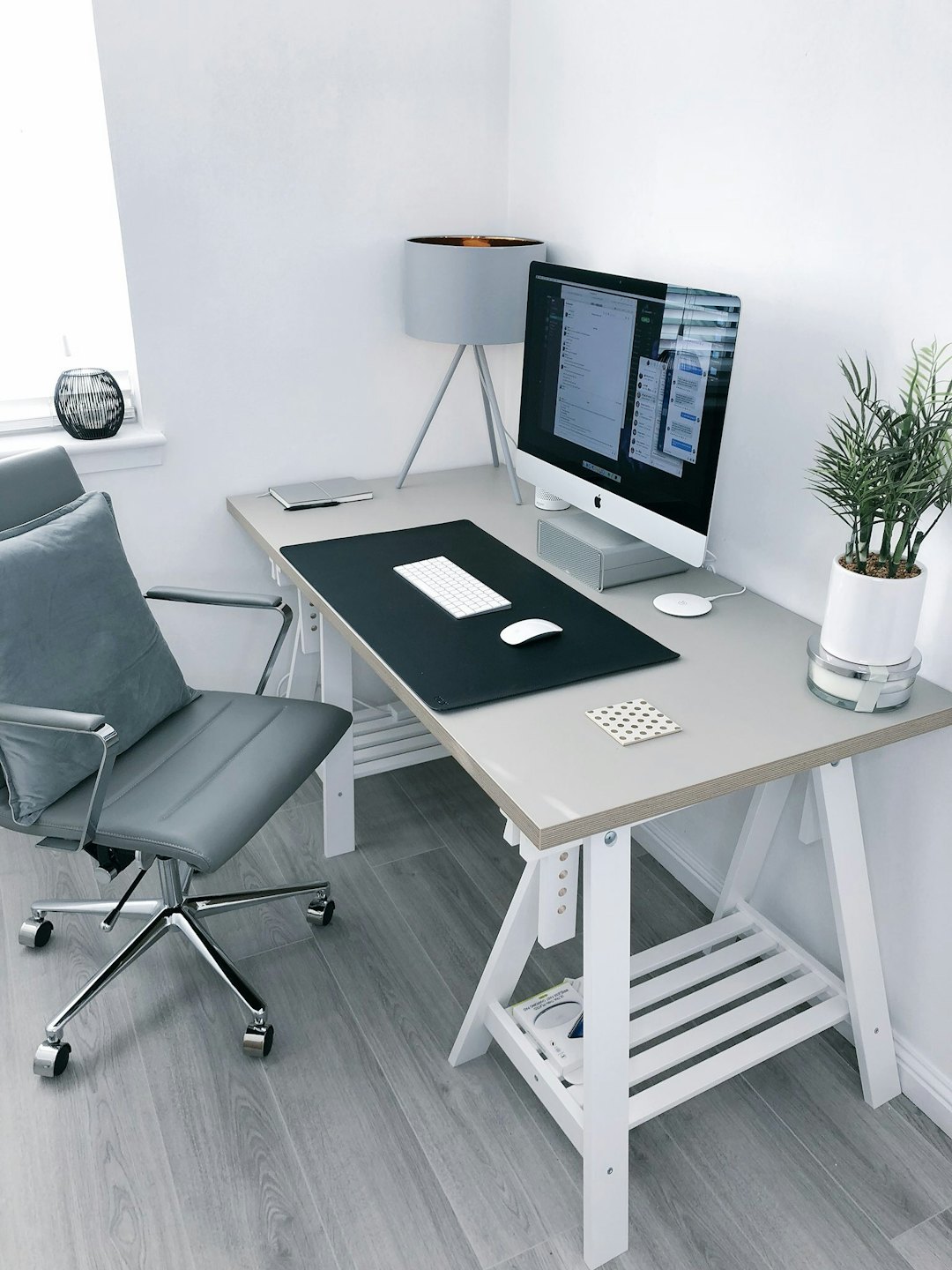
Comparing 3 stand designs on a 45 cm desk
| Stand type | Desk depth consumed | External keyboard clearance | Main advantage | Key limitation |
|---|---|---|---|---|
| Fixed aluminum C-frame stand | Moderate (18 to 22 cm) | Strong if open-bottomed to tuck a 65% or 75% keyboard underneath | Zero wobble, solid cooling, affordable | Height and tilt angle are fixed |
| Adjustable Z-hinge stand | Large (often 22 to 26 cm) | Tight when the solid bottom plate blocks keyboard placement | Easy height adjustment to eye level | Eats shallow desk depth; cheap hinges sag over time |
| Desk-clamp laptop arm | Near zero on the tabletop | Maximum room for full-size keyboards and mouse movement | Frees almost the entire 45 cm surface | Needs a rear desk lip at least 2 cm thick without blocking crossbars |
3 measurements to take before ordering
- Check the rear wall gap: A clamp-mounted laptop arm needs at least 5 to 7 cm behind the desk if you want the arm joint to fold back cleanly.
- Measure your external keyboard depth: A compact 65% or 75% mechanical keyboard measures roughly 12 to 14 cm deep, saving crucial room compared to a full-size board with a wrist rest (up to 22 cm).
- Check your laptop hinge opening angle: Some laptops stop at 130 degrees. Paired with a steep fixed-angle stand, the screen may tilt upward instead of facing your eyes squarely.
Practical recommendation for a 45 cm desk
- First choice: A desk-clamp laptop arm with a vented tray, provided your desk's back edge accepts a C-clamp. It is the only option that gives back almost all 45 cm of tabletop depth.
- Second choice: An open-bottom aluminum C-frame stand if your desk sits flush against a wall or has a solid back panel. Choose a slim base without a front crossbar so you can slide your keyboard under the laptop when writing in a notebook.
- Avoid: Bulky dual-hinge Z-stands with oversized rectangular base plates if you pair your laptop with an external keyboard on a narrow surface.
Frequently asked questions
Why do Z-hinge laptop stands feel cramped on a 45 cm desk?
Most adjustable Z-hinge stands have a wide 22–26 cm base plate that sits right where your external keyboard and wrists need to rest.
What keyboard size pairs best with a 45 cm deep desk?
A compact 65% or 75% keyboard (12–14 cm deep) saves roughly 8 cm compared to a full-size board with a thick wrist rest.
How high should the top of my laptop screen sit?
Position the top third of your laptop screen roughly at eye level so your neck stays neutral without tilting downward.